DC Cable Sizing for a Shed System: Battery, Inverter and Solar Cables
Low-voltage DC needs fat cables. Here is why and how to think about it.
DC cables in a solar system carry high currents at low voltage. Undersized cable wastes power and can overheat.
1. Work out the current
- Inverter cable: inverter watts ÷ battery voltage ÷ efficiency. A 2,000W inverter on 24V can draw around 90A or more.
- Solar cable: the array's short-circuit current, plus a safety margin.
2. Check two things
- Current rating: the cable must carry the current without overheating, for how it's installed.
- Voltage drop: keep the drop low, especially on battery and inverter cables.
3. Higher voltage helps
A 48V system carries a quarter of the current of a 12V system for the same watts. That's why bigger sheds use 24V or 48V.
4. Fuses and isolators
Each cable needs protection rated for it, close to the battery. DC isolators and breakers must be rated for DC at your voltage. See Fuses, Breakers and Isolators.
5. Rules
Solar DC wiring and anything connected to building wiring has Australian Standards that installers follow. Have an electrician or accredited installer design and check it.
6. Quick summary
- Work out the real current first.
- Check both current rating and voltage drop.
- Higher system voltage means smaller cables.
In Australia, any work on 240V AC wiring, including connecting an inverter, battery or solar system to a switchboard or fixed wiring, must be done by a licensed electrician.
Related guides
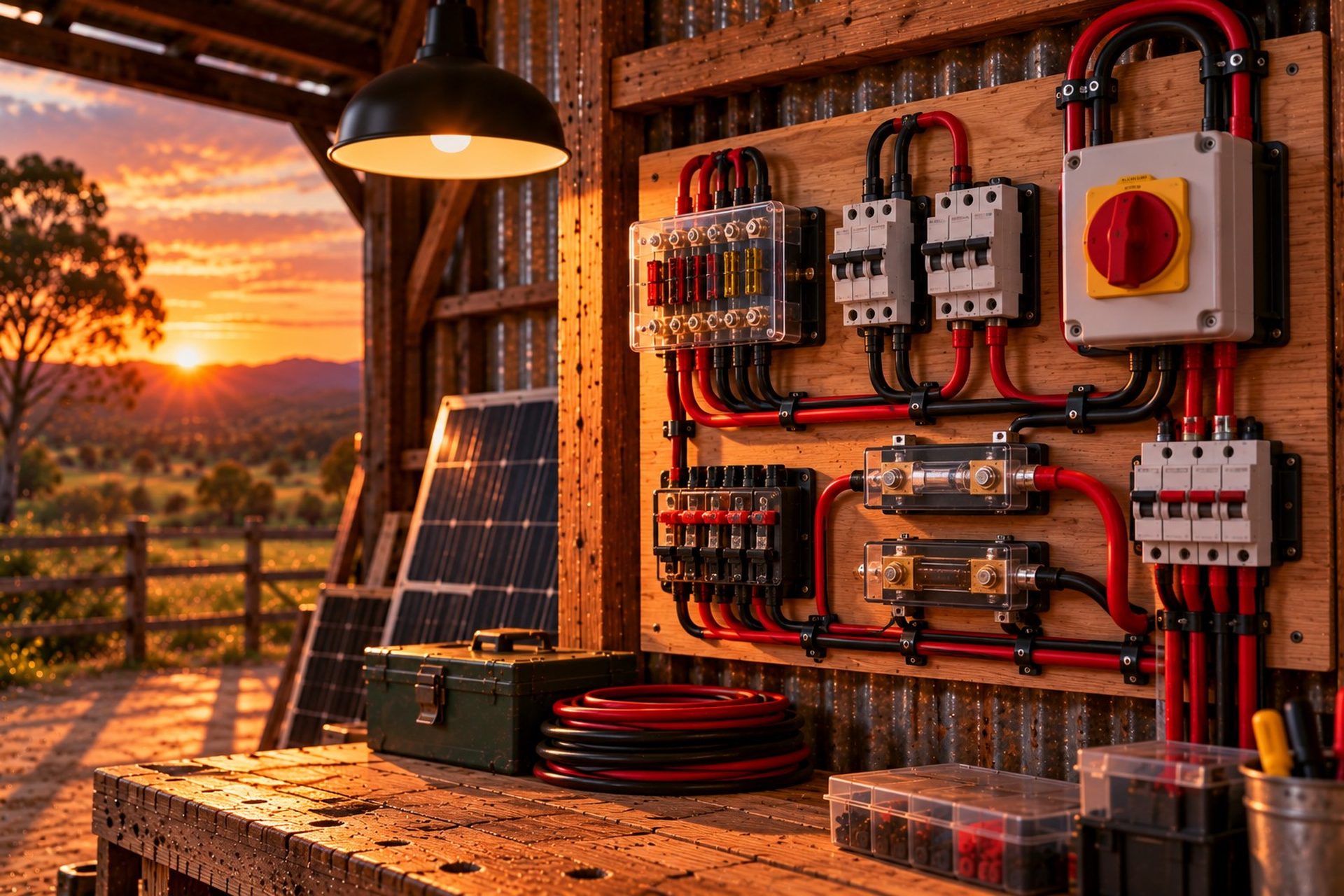
Fuses, Breakers and Isolators for DC Solar
What each protective part does, where it goes in a 12V to 48V DC solar system, why lithium batteries need a high-rated main fuse, and common mistakes.
Read guide →
12V, 24V or 48V? Picking a System Voltage
Why system voltage matters, how it changes the current and cable size, and which voltage suits a shed, workshop or home.
Read guide →