Planning Workshop Power With Your Sparky: What to Have Ready
Do your homework and the sparky's quote will be faster and closer.
Any wiring in a shed or workshop at 240V AC must be done by a licensed electrician. You can make the job quicker and cheaper by having your plan ready.
1. List your tools and loads
Write down every tool and appliance with its watts or amps from the label. Note which ones run together.
2. Mark the big ones
- Welders, compressors, saws and heaters have big start-up or running currents.
- Note any 15A plugs. Some tools need a 15A outlet and circuit.
3. Where you want power
Sketch the shed with benches, outlets, lights and where the big tools go.
4. Solar and battery plans
Tell the sparky if you plan to add solar, a battery or a generator inlet later, so the switchboard and cable can allow for it.
5. Questions to ask
- How many circuits, and what's on each?
- Does the supply cable to the shed suit the load and length?
- Where do the RCDs go?
- Is there room in the board for later?
6. Quick summary
- List tools, watts and which run together.
- Sketch where you need outlets.
- Mention future solar, batteries or a generator.
- Use the Daily Power Needs Calculator to add it up.
In Australia, any work on 240V AC wiring, including connecting an inverter, battery or solar system to a switchboard or fixed wiring, must be done by a licensed electrician.
Related guides
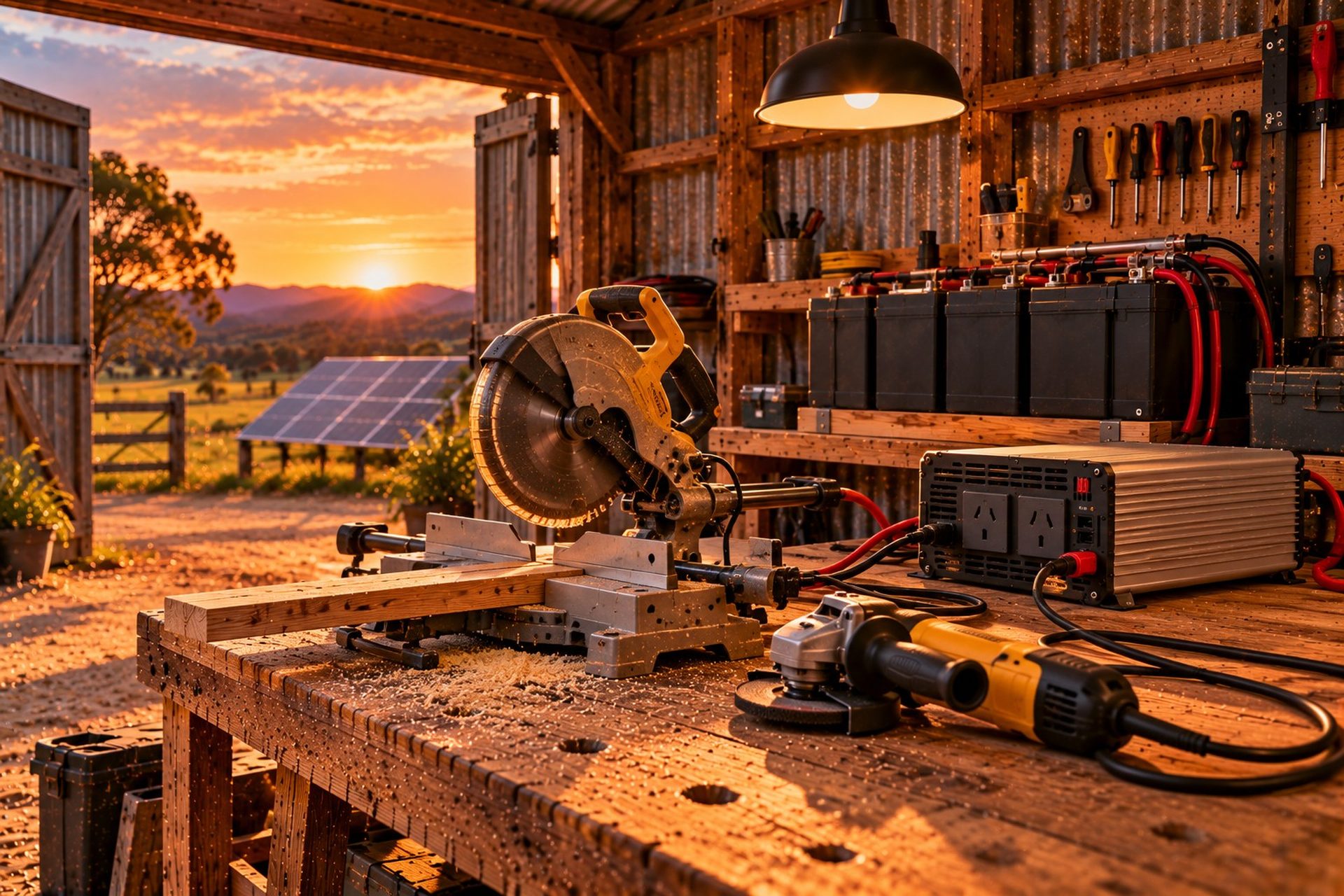
Running Power Tools Off Solar
How much inverter and battery you need to run workshop tools, why motors need a surge allowance, and what runs easily.
Read guide →
How to Calculate Home or Shed Power Needs
The first step for any solar system: list what you run, how long for, and turn it into the daily energy your system has to supply.
Read guide →