Battery Cycle Life and Warranties: Reading the Fine Print
Ten years or so many megawatt-hours, whichever comes first. Here is what that means.
Battery warranties often have more than one limit. Read them all to know what you're really getting.
1. Cycle life
A cycle is roughly one full charge and discharge. Cycle life is how many cycles until the battery drops to a set capacity, often 70 or 80% of new. Lithium iron phosphate (LiFePO4) batteries often list several thousand cycles.
2. Depth of discharge
Using less of the battery each day usually means more cycles. Ratings are given at a stated depth of discharge (DoD). Check what DoD the cycle figure assumes.
3. Warranty limits
Home battery warranties often say something like "10 years or X MWh of throughput, whichever comes first", and a minimum capacity at the end.
4. What shortens life
- Heat.
- High charge and discharge currents.
- Sitting full or empty for long periods.
- Charging below the low temperature limit.
5. Comparing value
Cost per kWh cycled = price ÷ (usable kWh × cycles). Use the Battery Cost per kWh Cycled Calculator and the Battery Warranty Throughput Calculator.
6. Quick summary
- Check cycles, DoD, years and throughput.
- Keep batteries cool.
- Compare on cost per kWh cycled.
In Australia, any work on 240V AC wiring, including connecting an inverter, battery or solar system to a switchboard or fixed wiring, must be done by a licensed electrician.
Related guides
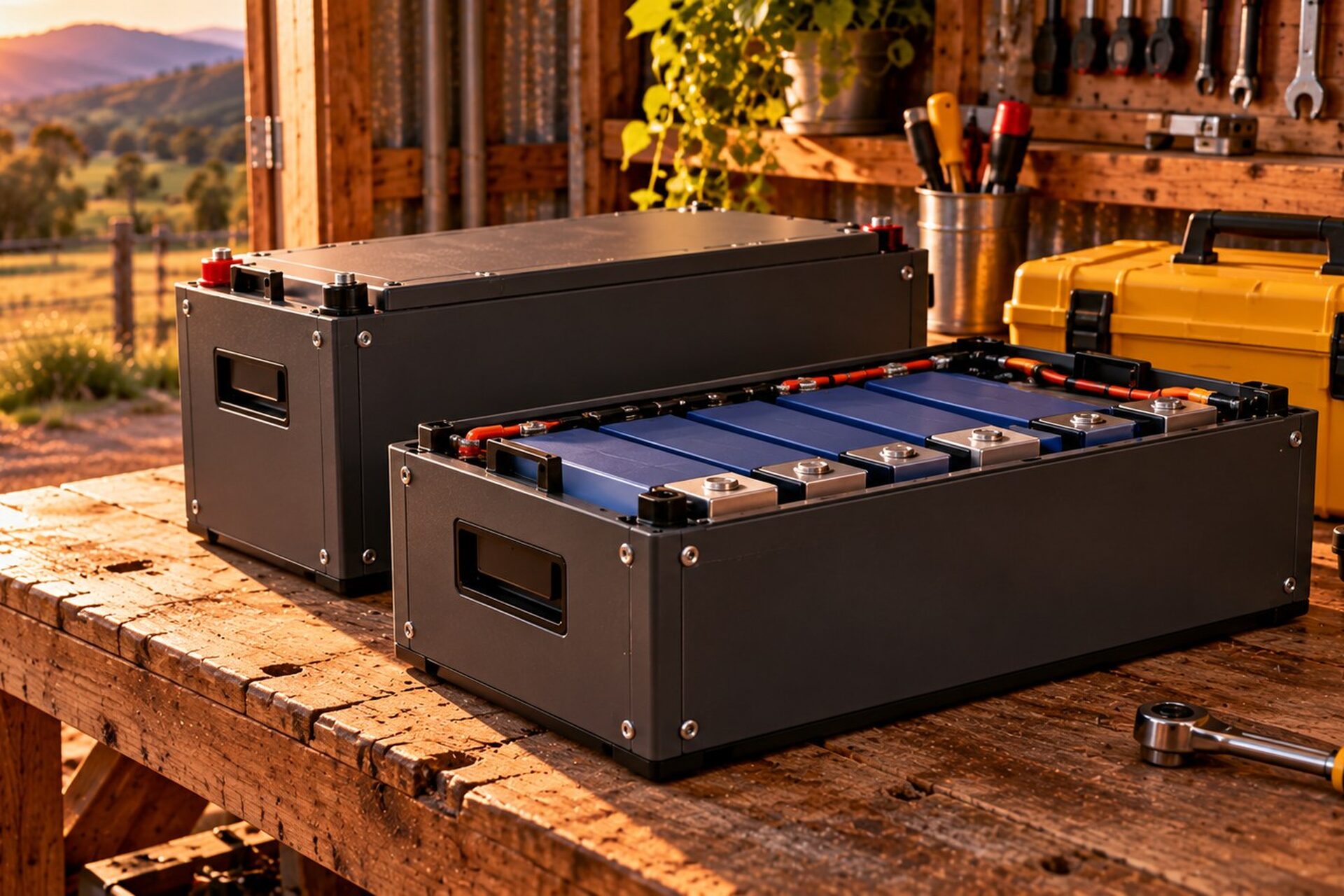
LiFePO4 Batteries Explained: Capacity, Voltage and Usable Energy
What LiFePO4 battery ratings mean for a shed, workshop or home: 12.8V, 25.6V and 51.2V, Ah vs kWh, usable energy, stacking, cycle life, cold charging and a buyer's checklist.
Read guide →
How to Size a Battery Bank for an Off-Grid System (With Examples)
Size an off-grid battery for a shed, workshop or home: daily energy, days without sun, usable capacity, current limits, ageing and the maker's rules, with two worked examples.
Read guide →